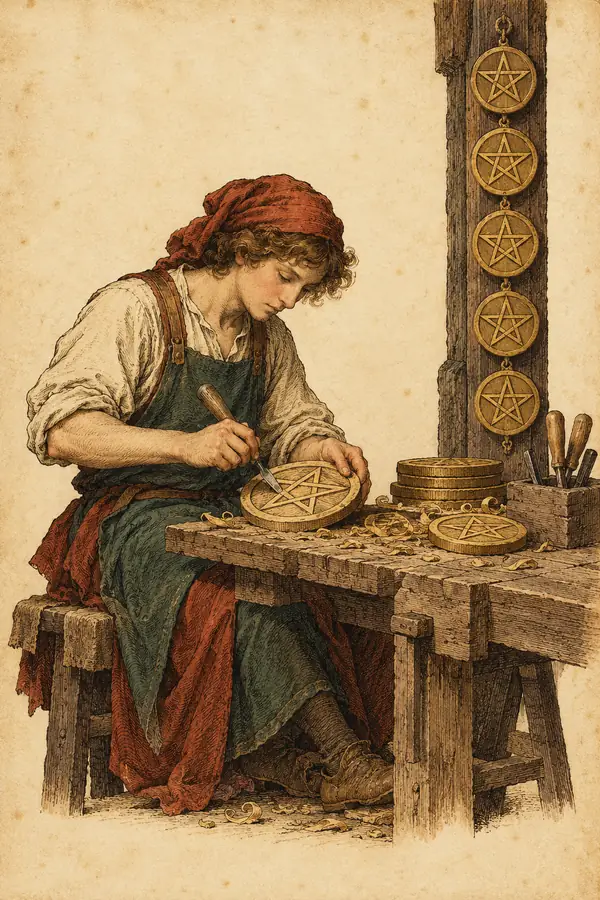
practice · diligence · skill
Pentacles
Eight of Pentacles
Building real skill through steady practice
Upright
Building real skill through steady practice
The Eight of Pentacles honors the quiet satisfaction of practice. It shows someone absorbed in careful work, repeating a task until it improves. In daily life, this might mean learning a recipe properly, practicing an instrument, refining your writing, or simply doing a routine job with more attention than usual. Mastery, this card suggests, is built through consistent and often unglamorous effort. Progress may be slow, but it is real and it accumulates. Today, consider choosing one skill and giving it your full attention, even for twenty minutes. Notice the details, ask for feedback, and enjoy the process of getting better. Small improvements, made patiently, can add up to something you are proud of.
In love
Relationships benefit from practice too. Learning to listen better, speak more clearly, or show appreciation consistently can deepen a bond. Pay attention to the small, repeated actions, like a morning message or a remembered detail, that build trust over time.
At work
Diligence and focus are in the spotlight. This is a good time to study, train, or polish your work. Attention to detail and steady improvement can earn respect from others and lead to results you feel genuinely satisfied with.
Which skill would I like to improve with patient, focused practice?
Reversed
When practice turns into perfectionism or boredom
Reversed, the Eight of Pentacles can point to difficulty staying engaged with practice. Repetition may feel dull, other interests may keep pulling you away, or you might rush through tasks without much care. Alternatively, this reversal can describe perfectionism: polishing something long after it is good enough, so it never quite feels finished. Both patterns can drain the joy from learning. Reconnect with why the skill matters to you in the first place. Could practice become more varied, perhaps by changing the setting or adding a small challenge? Could you define clearly what done looks like? Balancing care with self-compassion helps you keep growing without burning out or getting stuck.
In love
Routine may feel flat, or you might be trying too hard to make everything perfect. Bring curiosity to everyday moments and allow some imperfection. Small, sincere efforts, offered regularly, tend to matter more than flawless gestures saved for special occasions.
At work
Rushed work or endless revisions might be holding you back. Define what good enough means for this task. If motivation is low, look for a new angle, a mentor, or a goal that renews your interest.
What would help me practice with both care and ease?